
Why Adaptive Reuse Is Often the Smartest Path for Behavioral Health Facilities
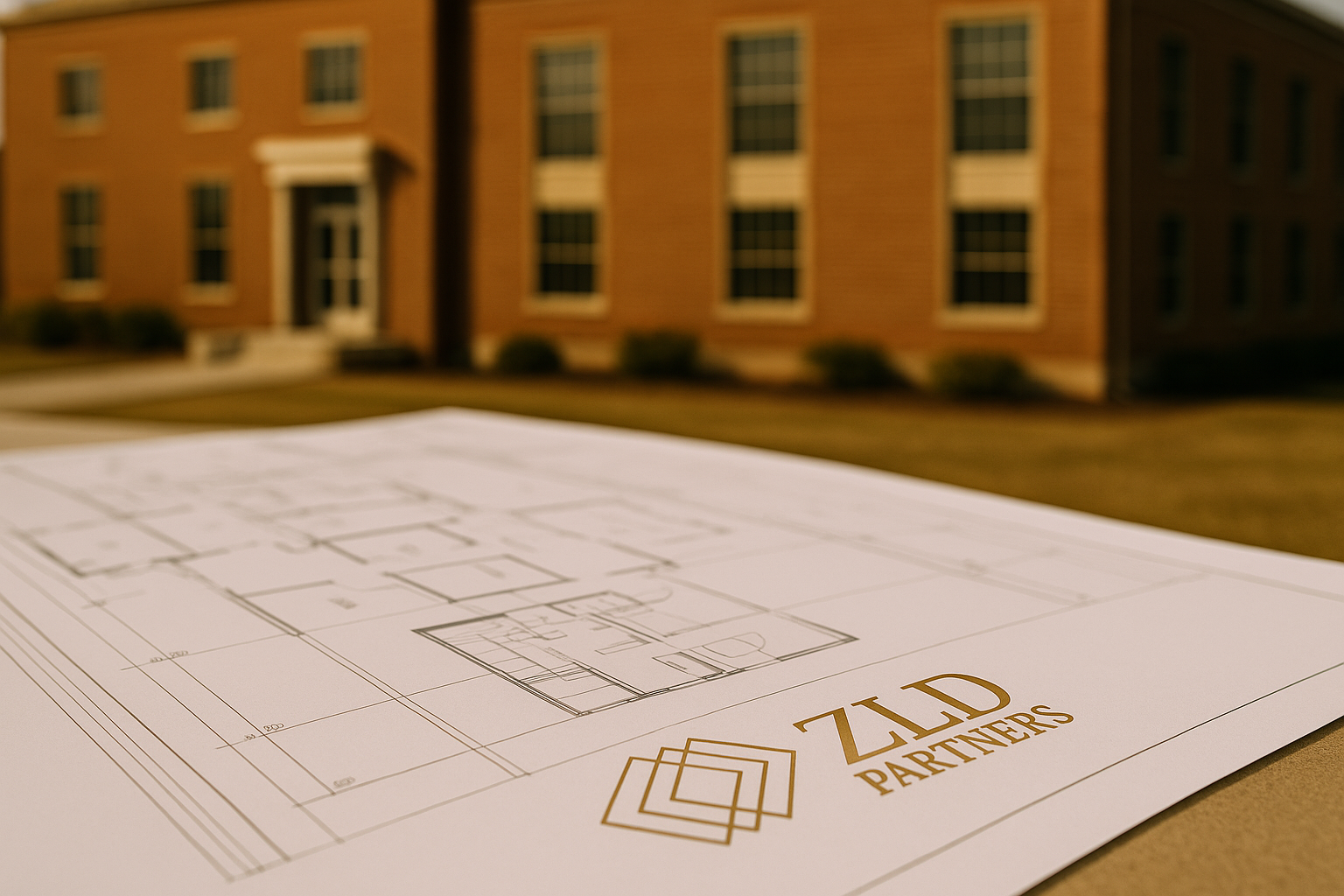
In behavioral health development, most people assume that building a new facility from the ground up is the cleanest and most efficient solution. On paper, it sounds logical: design exactly what you need, build it once, and move in.
But in practice, adaptive reuse–transforming an existing building to support behavioral health services–often delivers better outcomes across speed, cost, community acceptance, and clinical function.
At ZLD Partners, we see this every day. The fastest, most successful behavioral health launches almost always come from repurposed buildings rather than new construction. Here’s why.
1. Speed isn’t a luxury — it’s a clinical and financial advantage
Healthcare organizations can’t wait 24–36 months for a facility to open.
Adaptive reuse shortcuts a massive part of that timeline because:
-
The building envelope already exists
-
Utilities are already in place
-
Mechanical systems can often be upgraded instead of built from scratch
-
Site work is dramatically reduced
What normally takes months can shrink to weeks.
And that time savings translates directly into earlier revenue, earlier hiring, earlier census growth, and earlier access to care for the community.
2. Zoning and neighborhood resistance are easier with reuse
New construction is predictable in one way: it nearly always triggers pushback.
Neighbors worry about traffic, noise, property values, and the stigma of a behavioral health facility being “built next door.”
Repurposed buildings are different.
People already know the structure and have lived with it for years. A former school, office, clinic, or nursing home carries far less emotional friction than fresh construction.
Communities tolerate adaptation better than disruption–and for providers, that can be the difference between smooth approval and a stalled project.
3. Cost is redirected into what actually matters for care
In new construction, a huge portion of capital goes into:
-
Ground prep
-
Foundations
-
Steel
-
Exterior walls
-
Roofing
-
Site drainage
-
Parking lots
All necessary, but none of it impacts the client experience.
Adaptive reuse lets capital flow into what does matter:
-
Client rooms
-
Nurse station sightlines
-
Group spaces
-
Lighting
-
Finishes that feel safe, not institutional
-
Trauma-informed design
-
Staff workflow optimization
-
Security and life safety systems
You’re not building a box.
You’re building a recovery environment.
Reuse allows more of the budget to support that mission.
4. Many older buildings already have inherent advantages
Not every building can become behavioral health, but the right ones offer features that would cost a fortune to replicate:
-
Mature landscaping and outdoor areas
-
Wide hallways
-
High ceilings
-
Large windows
-
Existing internal courtyards
-
Durable construction from earlier eras
Instead of starting from nothing, you’re shaping an existing structure into something clinically meaningful.
5. Adaptive reuse aligns with recovery itself
Recovery is a process of transformation–taking something that already exists and reshaping it into something functional, safe, and meaningful.
Buildings are the same.
When done well, adaptive reuse creates spaces that feel familiar rather than institutional, grounded rather than sterile, and warm rather than clinical.
Clients feel that difference immediately.
The bottom line
Adaptive reuse isn’t a shortcut.
It’s a strategy.
It allows providers to open faster, spend smarter, earn community support, and create spaces that truly support recovery.
And it’s one of the areas where ZLD Partners brings deep expertise–from feasibility and siting, to design alignment, to operational planning, to full implementation.
If your organization is considering a behavioral health facility, adaptive reuse may be the path that gets you there sooner, safer, and with a space that actually works.