
The Most Expensive Mistakes in Behavioral Health Renovations Happen After the Walls Are Up
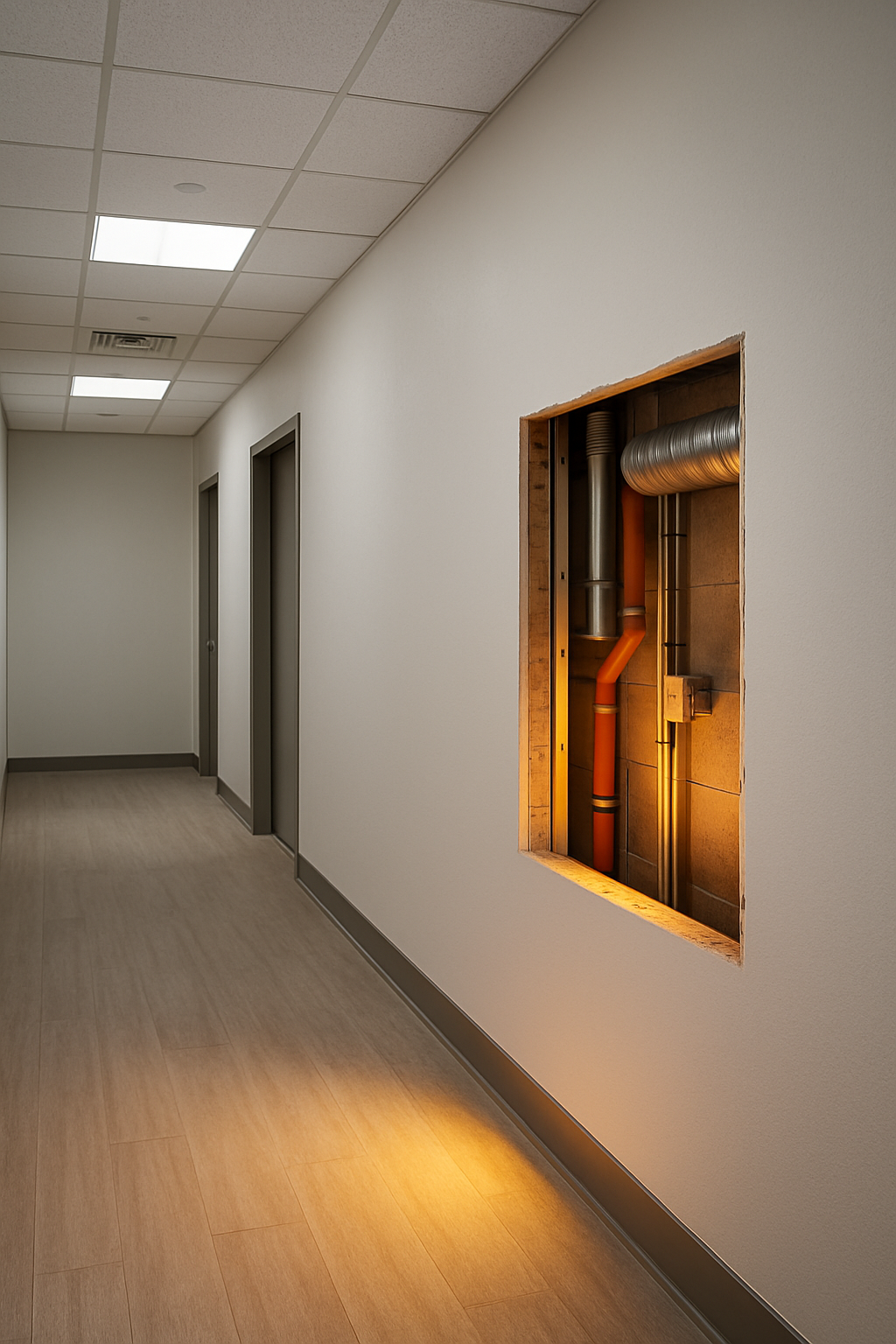
In adaptive reuse, everyone pays attention to the early risks: zoning, existing conditions, building age, and the complexity of the floor plan. But in behavioral health development, the most expensive mistakes rarely show up at the beginning of a project.
They reveal themselves after the walls are already up, at the exact moment when correcting them becomes exponentially more costly.
Behavioral health facilities place unique demands on a building’s mechanical, electrical, life safety, and security systems. When those requirements are not accounted for early in design or sequencing, the project experiences late-stage surprises that can add weeks to the schedule and six figures to the budget.
These issues disrupt construction timelines, force rework, and create frustration between owners, architects, and contractors. Almost all of them are preventable with strong early technical due diligence.
Here are the most common and most expensive late-stage mistakes we see.
1. Fire Panel and Life Safety Mismatches
This is one of the biggest budget killers in behavioral health conversions.
A building may look straightforward on paper, but the existing fire alarm system may be incompatible with new hardware, lack the capacity for required devices, or require a new panel to integrate with modern access control. It may also fall short of behavioral health occupancy or licensure expectations.
The worst moment to discover this is during final inspections.
A fire alarm panel replacement late in the project often requires invasive wall openings, device rewiring, ceiling replacement, and life safety zone reconfiguration. It also triggers additional testing fees. This can easily become a five- or six-figure surprise that adds weeks to the schedule.
2. Inadequate Electrical Infrastructure for Modern Behavioral Health Requirements
Behavioral health facilities are far more power-intensive than many developers expect.
Late in a project, it is common to discover overloaded panels, insufficient breakers, no capacity for camera or security systems, inadequate power for med room refrigeration and monitoring, low electrical capacity in nurse stations, or lighting circuits that cannot support safety expectations.
Once drywall is up, the solutions require panel upgrades, new conduit runs, patching, repainting, and rework across finished spaces.
The earlier the assessment, the cheaper it is. The later it happens, the more painful the fix becomes.
3. HVAC and Mechanical Systems That Cannot Meet Behavioral Health Loads
This is another late-stage discovery that derails projects even when the building appears complete.
Behavioral health facilities often require additional air exchanges, improved temperature control for client comfort, negative or positive pressure zones in select rooms, and adequate cooling for IT closets. Many older buildings, especially former ALFs or office spaces, cannot meet these demands without upgraded ductwork, additional rooftop units, larger compressors, rebalanced airflow, or enhanced zoning controls.
Addressing these issues after ceilings are installed and fixtures are mounted requires significant demolition and reconstruction.
4. Plumbing Oversights in Residential Behavioral Health Settings
One of the most underestimated risks in behavioral health development is plumbing capacity.
Late-stage discoveries often include insufficient hot water recovery for dozens of beds, undersized supply lines, low-capacity sewer systems, aging stacks, or venting issues that only appear with high usage.
Correcting plumbing late in construction often requires trenching concrete, opening walls, repiping vertical stacks, or modifying mechanical rooms. Plumbing is never inexpensive, but late plumbing corrections are particularly costly.
5. Access Control and Security Installed Too Late in the Build
Access control wiring must be planned early. When it is not, construction teams encounter improperly placed conduits, misaligned wired doors, incompatible hardware, or cut-and-patch work on finished surfaces.
Access control also interlocks with fire panels, life safety sequencing, door schedules, and electrical rough-ins. When access control is treated as a late-stage install instead of a core design element, the result is almost always rework and unnecessary cost.
6. IT Rooms and Low-Voltage Pathways Added as an Afterthought
Behavioral health facilities rely heavily on robust low-voltage infrastructure. This includes cameras, badge systems, EMR workstations, networking, alert systems, and secure communications.
If IT closets or low-voltage pathways are not planned early, they often end up too small, lack cooling, exceed electrical capacity, or require reopening finished walls to manage cable runs.
It is common to see beautifully finished corridors cut back open because the true cable load for the security system was never accounted for.
7. Storage, Support Rooms, and Back-of-House Space Squeezed Too Late
This is one of the most frequent late discoveries.
Behavioral health operations require secure storage, utility rooms, laundry workflows, custodial spaces, and staff equipment staging. When these support spaces are not dimensioned properly during design, teams often reach the late stages of construction before realizing that storage is insufficient or that back-of-house workflows conflict with client areas.
The late-stage solution is usually to carve space out of areas that are already framed or finished, or to reconfigure walls entirely.
The Bottom Line
In behavioral health development, the biggest construction surprises and cost overruns typically do not occur at the beginning of a project. They emerge at the end, after ceilings are installed, floors are finished, and walls are painted.
And they almost always stem from the same root issue: critical technical requirements were not fully understood or sequenced early enough in design.
When ZLD evaluates a building or leads a conversion, we focus as much on mechanical, electrical, life safety infrastructure, access control planning, and IT integration as we do on layout. The most expensive mistakes in behavioral health are not visible during demolition or rough framing. They appear when everything looks finished and correcting them requires tearing the building back open.