
How Site Constraints Quietly Kill Behavioral Health Deals
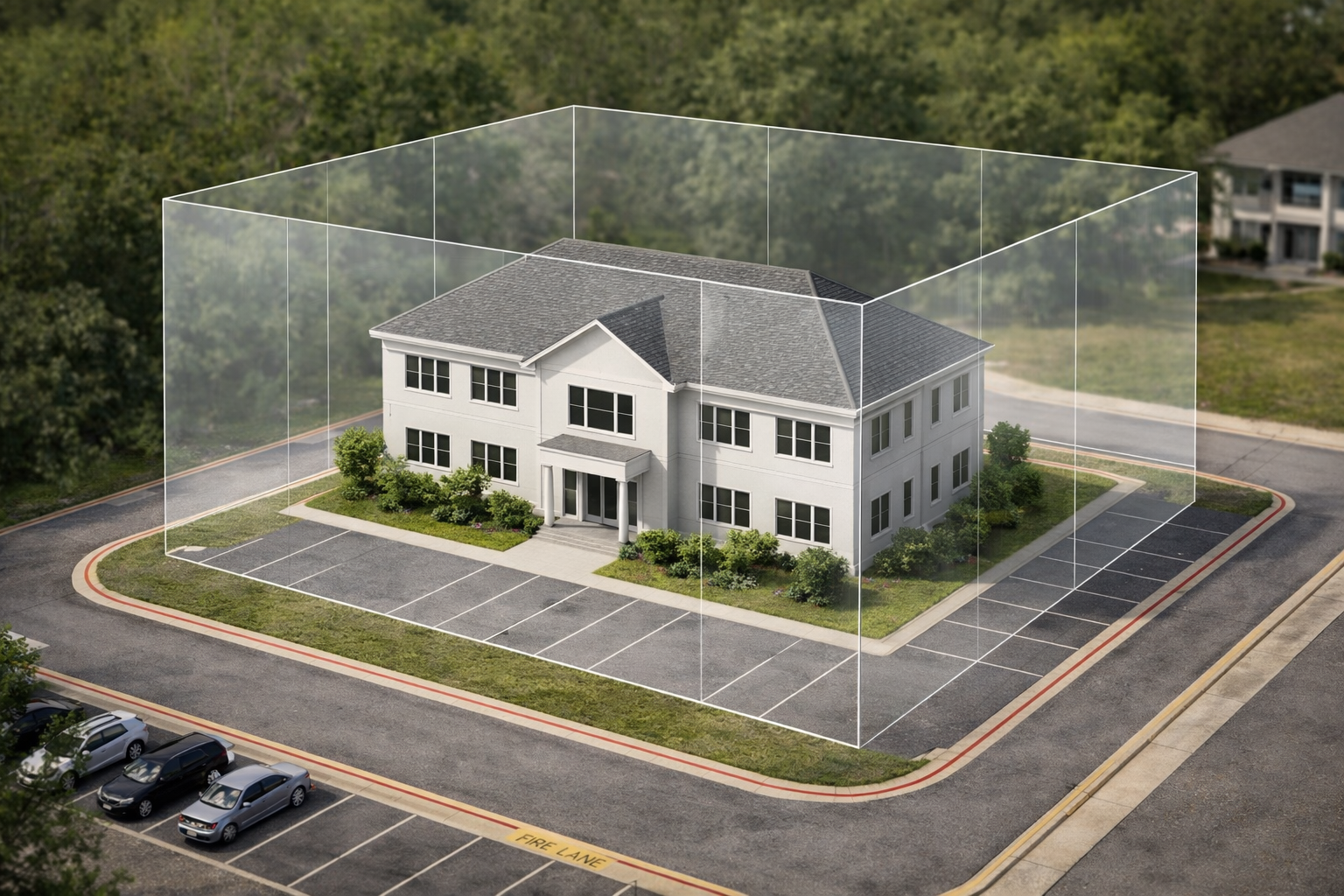
On paper, many behavioral health real estate deals look strong. The building is the right size, the acquisition price makes sense, and the market demand is there. But long before design is finalized or construction begins, many of these projects quietly fail for a different reason.
The site itself cannot support the use.
Site constraints are one of the most common and least discussed reasons behavioral health projects stall or collapse. They do not always show up in early underwriting, and they are easy to underestimate if the focus stays on the building alone. Yet once these constraints surface, they can limit occupancy, drive up construction costs, or make approvals impossible.
Here are the site issues that most often derail behavioral health projects before they ever reach construction.
1. Setbacks and Buildable Area Limitations
Zoning setbacks can dramatically reduce what is actually usable on a site. While the building footprint may already exist, setbacks still affect expansions, additions, fencing, outdoor areas, and even fire access.
In behavioral health, setbacks often conflict with needs such as secure outdoor space, additional program rooms, or future expansion. A site may technically allow the use, but leave no room to adapt the building in a way that supports the program.
This becomes especially problematic when a project depends on adding square footage or modifying circulation later in the design process.
2. Fire Access and Apparatus Requirements
Fire access is one of the most common late-stage deal killers.
Many sites do not meet fire department requirements for:
-
apparatus access roads
-
turning radii
-
distance to entrances
-
ladder access
-
fire lane width
These issues are not architectural preferences. They are code and fire marshal requirements, and they often require changes to parking layouts, drive aisles, landscaping, or even building placement.
On constrained sites, there may simply be no way to resolve these requirements without removing parking or reducing capacity, which can make the project financially unworkable.
3. Parking Ratios That Do Not Match Behavioral Health Use
Behavioral health facilities operate differently than typical medical or office uses. Staff are present around the clock, shifts overlap, and admissions activity does not follow standard business hours.
Many zoning codes require parking ratios that do not align well with these operational realities. On small or irregular sites, meeting parking requirements can force difficult trade-offs, including reducing bed counts, eliminating outdoor areas, or seeking variances.
When parking cannot be resolved cleanly, the project often slows down or becomes a candidate for extended review.
4. Utility Capacity and Site Infrastructure
Utility constraints are often overlooked early because they sit outside the building envelope.
Common issues include:
-
insufficient water or sewer capacity
-
limited electrical service at the site
-
aging or undersized connections
-
utility easements that restrict expansion
Upgrading site utilities can be expensive and time-consuming, particularly if it requires coordination with municipalities or utility providers. In some cases, the timeline or cost makes the project impractical even if the building itself is suitable.
5. Easements, Encroachments, and Shared Access
Easements and shared access agreements can quietly restrict what a site can support.
These can include:
-
shared driveways
-
access rights for neighboring parcels
-
utility easements that limit construction
-
restrictions on fencing or security features
Behavioral health facilities often require secure perimeters, controlled access points, and clear separation of public and private areas. Existing easements can conflict directly with these needs and limit the ability to design the site safely and compliantly.
6. Topography and Drainage Challenges
Slopes, retaining walls, and drainage issues add complexity and cost to any project, but they are particularly impactful in behavioral health development.
Grade changes can affect accessibility, emergency access, outdoor programming areas, and expansion potential. Drainage requirements can reduce usable land area or require costly civil work that was not accounted for in early budgets.
These challenges rarely appear in a simple site walk-through, but they become unavoidable once engineering begins.
7. Limited Room for Future Growth
Even when a site works for an initial phase, it may fail to support future growth.
Behavioral health projects often evolve. Programs expand, licensing changes, and additional services are added over time. A site that has no room for expansion can limit long-term value and flexibility.
From an investment perspective, this can reduce upside and complicate exit strategies.
The Bottom Line
Behavioral health deals often fail quietly, not because the building is wrong, but because the site cannot support the use once real constraints are applied.
Setbacks, fire access, parking, utilities, easements, and topography all shape what is actually possible. These issues tend to surface later in the process, after time and money have already been invested.
This is why site evaluation matters as much as building evaluation. Understanding site constraints early allows teams to avoid unworkable deals, set realistic timelines, and make better decisions before construction ever begins.