
Why Behavioral Health Real Estate Fails When It’s Treated Like Traditional Healthcare Development
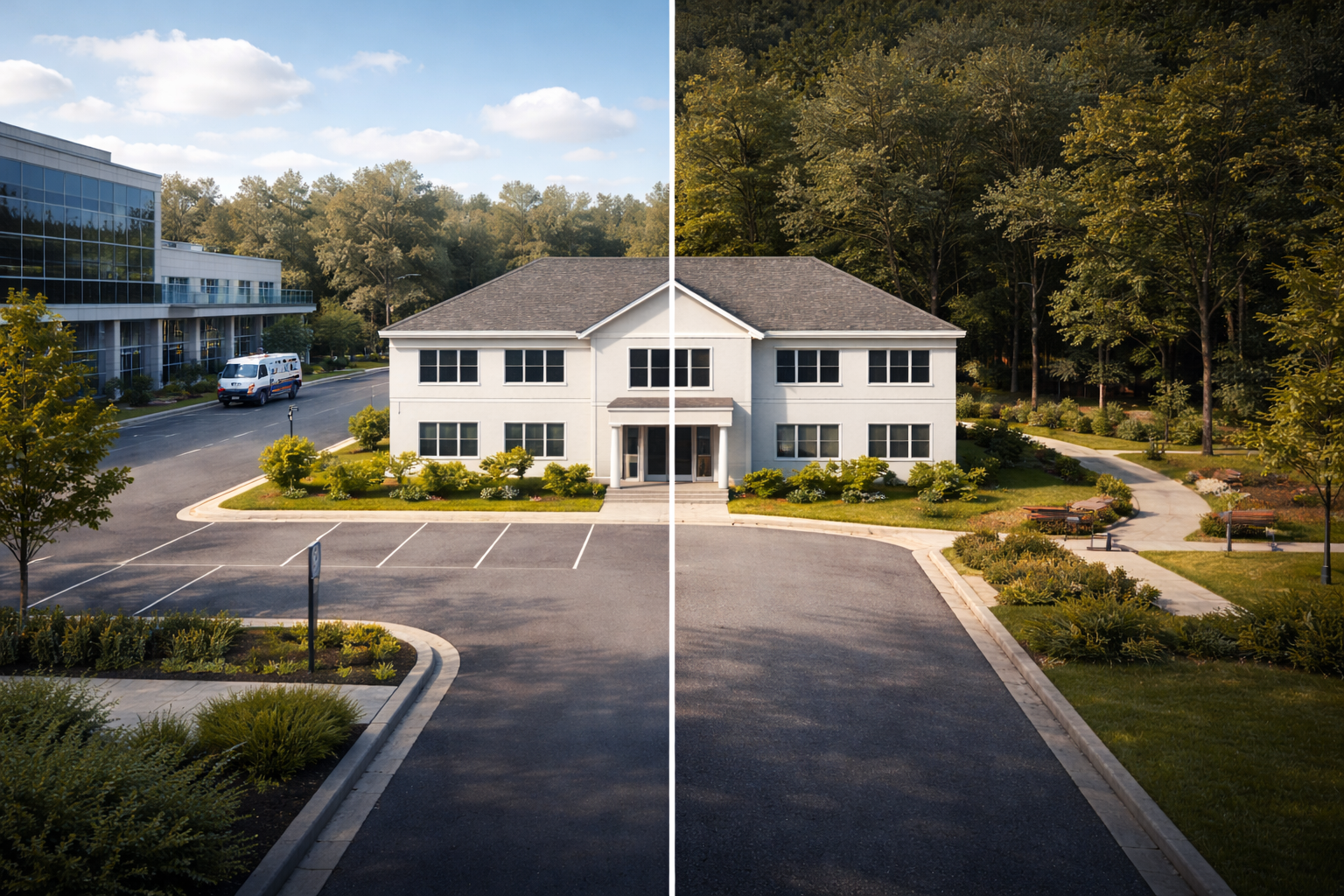
Behavioral health real estate often struggles for a simple reason: it is still being approached like traditional healthcare development.
On the surface, the comparison makes sense. Behavioral health is regulated, licensed, and clinically driven. Many teams assume that if a project follows the same development logic as medical office buildings or outpatient healthcare, it will succeed.
In practice, that assumption causes friction at nearly every stage of the process.
Behavioral health is not just a clinical use layered onto a building. It is a land use category with its own regulatory, operational, and financial realities. When projects are planned through a conventional healthcare lens, they tend to break down in predictable ways.
Traditional Healthcare Development Prioritizes the Building
Most healthcare development workflows are building-first.
Teams focus early on:
-
square footage
-
program layout
-
construction scope
-
finish level
-
cost per square foot
Zoning, community review, and operational nuance are often treated as secondary inputs that can be resolved alongside design.
That approach works reasonably well for medical office, ambulatory care, and many outpatient uses. It does not translate cleanly to behavioral health.
Behavioral Health Is Constrained by Land Use Before Design Ever Begins
Behavioral health development is shaped first by land use conditions, not architectural ambition.
Even when a building appears suitable, projects are often constrained by:
-
zoning classifications that allow the use only conditionally
-
parking and access requirements that do not align with 24-hour operations
-
fire and life safety requirements that affect site layout
-
setbacks, buffers, and easements that limit expansion or outdoor space
-
community review processes that introduce timeline and entitlement risk
These factors define what is possible long before floor plans are finalized.
When teams treat behavioral health like traditional healthcare development, they often commit to design and construction assumptions before these constraints are fully understood.
Operational Requirements Directly Influence Real Estate Viability
Behavioral health operations have real estate implications that are easy to underestimate.
Examples include:
-
overlapping staff shifts that affect parking demand
-
intake and admissions flow that influence building access points
-
security and supervision requirements that affect circulation
-
outdoor space needs tied to programming and safety
In traditional healthcare development, operations often adapt to the building. In behavioral health, the building and site must be shaped around operations.
When that distinction is missed, projects require late-stage changes that drive cost and delay.
Capital Views Behavioral Health Risk Differently
From a financing perspective, behavioral health introduces layers of perceived risk that traditional healthcare does not.
Lenders and investors pay close attention to:
-
entitlement certainty
-
regulatory exposure
-
licensing dependency
-
development timelines
-
exit assumptions
A project can be technically feasible and still struggle to attract capital if these risks are not clearly managed.
When behavioral health projects are underwritten like standard healthcare deals, the disconnect often appears late, after significant time and money have already been spent.
Why This Misalignment Persists
This misalignment persists because behavioral health sits between categories.
It is clinical, but not hospital-based.
It is residential in feel, but not residential in use.
It is regulated, but not standardized like other healthcare assets.
As a result, teams default to familiar healthcare development playbooks, even when the underlying assumptions do not hold.
A Different Development Lens Is Required
Successful behavioral health real estate projects start with a different order of operations.
They prioritize:
-
land use and zoning analysis early
-
site constraints before building design
-
operational flow alongside architectural planning
-
entitlement and timeline risk before construction assumptions
-
financeability, not just feasibility
When behavioral health is treated as its own development category, projects move more predictably and avoid many of the late-stage surprises that derail timelines and budgets.
The Bottom Line
Behavioral health real estate does not fail because teams lack clinical expertise or construction capability. It fails when it is approached as a traditional healthcare development problem.
Recognizing behavioral health as a distinct real estate and land use category is one of the most important steps teams can take to improve outcomes, control risk, and deliver projects that actually open as planned.