
Planning for Future Flexibility and Adaptability: Ensuring Long-Term Success in Behavioral Health Facility Design
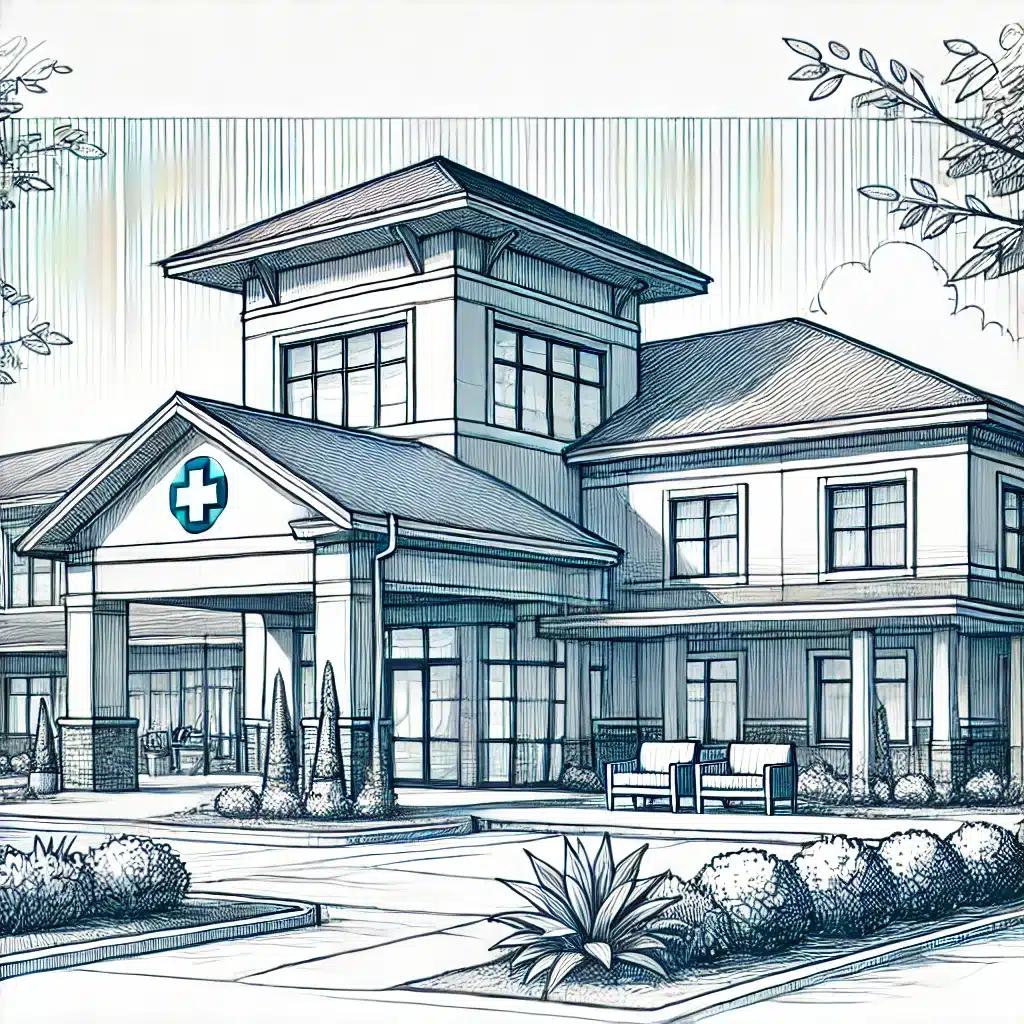

In the ever-evolving field of behavioral health care, facilities must be designed not only today’s needs but also with a clear vision of future adaptability and growth.
Building flexibility into the design allows facilities to adjust to changing patient needs, treatment modalities, regulatory requirements, and technological advancements.
At ZLD Partners, we emphasize creating flexible and adaptable spaces that can evolve over time, ensuring that our clients’ investments remain relevant and valuable for years to come.
Here’s an in-depth exploration of how we design for future flexibility and adaptability in behavioral health facilities.
Designing for Multi-Functional and Reconfigurable Spaces
A key aspect of future flexibility is the ability to modify spaces to accommodate different uses and changing needs without requiring extensive renovations. Multi-functional and reconfigurable spaces provide versatility, allowing facilities to adapt quickly to new programs, patient demographics, or service demands.
We incorporate multi-functional and reconfigurable spaces by:
Creating Open Floor Plans with Modular Elements: We design open floor plans with modular walls, partitions, and furniture that can be easily rearranged or removed. For example, therapy rooms can be expanded or divided based on group size or the type of therapy provided. This approach ensures that the facility can adapt to various treatment models, from one-on-one counseling to large group sessions.
Incorporating Flexible Furnishings: Selecting lightweight, movable, and stackable furniture that can be reconfigured to meet different purposes. For instance, tables and chairs can be rearranged to create different setups, from classroom-style for educational programs to a circular arrangement for group therapy.
Designing Multi-Use Rooms: Developing rooms that serve multiple functions, such as combining a dining area with a community gathering space or creating rooms that can be used for both therapy and administrative purposes. This flexibility maximizes the use of available space and allows facilities to adapt to changes in patient needs or service offerings.
By incorporating multi-functional and reconfigurable spaces, we provide facilities with the agility to respond to changing requirements and optimize space utilization.
Implementing Infrastructure for Technological Growth
The integration of technology is becoming increasingly important in behavioral health care, from telehealth services and electronic health records (EHRs) to advanced diagnostic tools and patient monitoring systems. Designing facilities with future technological growth in mind ensures that they remain at the forefront of care delivery.
ZLD Partners plans for technological growth by:
Installing Robust IT and Communication Networks: We design facilities with high-capacity data networks, ample power supply, and secure wireless connectivity to support current and future technology needs. This infrastructure supports telehealth services, digital communication tools, and secure data storage and access, enabling seamless integration of new technologies.
Creating Spaces for Technology Deployment: Designing rooms specifically for technology deployment, such as telehealth suites, IT rooms, or areas designated for future medical equipment. These spaces are designed to accommodate technology upgrades and expansions, ensuring the facility remains flexible as technological demands evolve.
Future-Proofing for Smart Building Systems: Preparing the facility for smart building technologies, such as automated lighting, HVAC systems, and security controls. We use adaptable wiring systems, conduit pathways, and ceiling panels that make it easier to integrate new devices and systems, enhancing operational efficiency and reducing long-term costs.
By planning for technological growth, we help ensure that facilities can easily adopt and implement new technologies, improving patient care and operational efficiency.
Planning for Scalability and Expansion
Behavioral health facilities must be designed with scalability in mind to accommodate growth in patient volume, service offerings, or staff. Planning for both horizontal and vertical expansion allows facilities to scale up or modify their services without significant disruption.
We support scalability and expansion by:
Designing for Vertical Expansion: Ensuring that the building’s structural integrity can support additional floors or wings in the future. This includes reinforcing foundations and load-bearing walls, designing elevators and stairwells with additional capacity, and planning for extended utility lines and systems.
Allocating Space for Future Additions: Designing the site layout to allow for horizontal expansion, such as adding new wings, therapy rooms, or outdoor spaces. We ensure that there is adequate space on the property for future growth while maintaining accessibility, parking, and landscaping.
Creating Modular Facility Components: Using modular construction techniques that allow for easy expansion of the facility. For example, constructing modular patient rooms or therapy spaces that can be added or removed as needed to accommodate changes in patient volume or service offerings.
By planning for scalability and expansion, we help our clients build facilities that can grow alongside their community and patient needs, maximizing long-term value and service delivery.
Designing for Diverse Patient Needs
Behavioral health facilities must be able to accommodate a wide range of patient needs, from children and adolescents to adults and seniors, as well as individuals with co-occurring conditions or varying levels of acuity. Flexible design allows facilities to serve diverse populations effectively.
ZLD Partners designs for diverse patient needs by:
Creating Age-Appropriate and Specialized Spaces: Designing spaces that can be easily adapted to meet the needs of different age groups or specialized populations. For example, therapy rooms can be outfitted with age-appropriate furniture, décor, and equipment that can be modified based on the patient group being served.
Incorporating Universal Design Principles: Ensuring that facilities are accessible to all patients, regardless of physical, sensory, or cognitive abilities. This includes wide hallways, accessible bathrooms, visual and auditory aids, and adjustable-height furniture, enabling the facility to serve a broader patient base.
Designing Flexible Care Environments: Creating care environments that can accommodate various levels of care, from outpatient services to residential treatment. This includes designing spaces that can be easily adapted for different levels of acuity, such as converting outpatient rooms into intensive care units or vice versa.
By designing for diverse patient needs, we create facilities that are inclusive, adaptable, and capable of providing high-quality care to a wide range of individuals.
Supporting Regulatory Flexibility and Compliance
The regulatory landscape for behavioral health care is constantly evolving, with new standards and guidelines emerging regularly. Facilities must be designed to adapt to changing regulations to maintain compliance and avoid costly renovations or operational disruptions.
At ZLD Partners, we support regulatory flexibility by:
Designing for Code Compliance Adaptability: Creating flexible layouts that can be modified to meet new fire safety, accessibility, or privacy standards without significant structural changes. This includes designing flexible floor plans, adaptable room sizes, and easily reconfigurable spaces.
Implementing Scalable Safety and Security Systems: Incorporating scalable safety and security systems that can be upgraded or expanded as needed to meet new regulatory requirements. This includes designing flexible surveillance systems, access controls, and emergency response protocols that can be adjusted over time.
Maintaining Proactive Monitoring of Regulatory Changes: Staying informed about changes in regulations and standards through ongoing engagement with regulatory bodies and industry organizations. This proactive approach allows us to anticipate potential compliance challenges and design facilities that can adapt quickly to new requirements.
Adaptive Reuse Projects: Converting alternate health facilities Behavioral Health Treatment Centers. This strategy leverages existing structures, revitalizing them to meet the specific needs of behavioral health operators.
By supporting regulatory flexibility, we help our clients maintain compliance and operational readiness, avoiding costly disruptions.
Enabling Programmatic Flexibility and Service Expansion
Behavioral health facilities often need to expand or change their program offerings to meet evolving community needs or respond to changes in funding, reimbursement models, or patient demographics. Designing for programmatic flexibility allows facilities to add new programs or modify existing ones without extensive renovations.
ZLD Partners enables programmatic flexibility and service expansion by:
Creating Expandable Service Areas: Designing service areas that can be easily expanded or reconfigured to accommodate new programs, such as outpatient services, intensive outpatient programs (IOPs), or residential treatment units. This includes creating spaces with movable walls, modular furniture, and adaptable infrastructure to support different levels of care.
Incorporating Shared Spaces: Designing shared spaces, such as conference rooms, meeting areas, and therapy rooms, that can be used by multiple programs or departments. This reduces the need for dedicated spaces for each service and allows the facility to adapt to changes in program offerings.
Planning for Vertical and Horizontal Expansion: Designing facilities with the potential for vertical (adding floors) or horizontal (expanding building footprint) expansion. This includes ensuring that the building’s structural load can accommodate additional floors or designing for future wings or extensions.
By planning for programmatic flexibility, we enable facilities to grow and evolve in response to changing community needs and funding landscapes.
Integrating Sustainable Design for Long-Term Adaptability
Sustainable design is an important aspect of creating flexible and adaptable facilities that can withstand changing environmental conditions and reduce operational costs. Integrating sustainability into the design ensures that facilities remain resilient and cost-effective over the long term.
At ZLD Partners, we integrate sustainable design principles by:
Using Sustainable Building Materials: Selecting environmentally friendly materials that are durable, low-maintenance, and have a lower environmental impact. This includes materials with low volatile organic compounds (VOCs), recycled content, and energy-efficient insulation.
Implementing Energy-Efficient Systems: Designing facilities with energy-efficient HVAC, lighting, and water systems to reduce utility costs and carbon footprint. We use smart building technologies to monitor and optimize energy use, enhancing sustainability and reducing operational costs.
Maximizing Natural Resources: Designing buildings that maximize the use of natural light, ventilation, and passive heating and cooling strategies to create comfortable environments while reducing energy consumption.
By integrating sustainable design, we create facilities that are adaptable to changing environmental conditions, reduce operating costs, and contribute to a healthier planet.
Designing for future flexibility and adaptability is essential for the long-term success of behavioral health facilities. By incorporating multi-functional spaces, planning for technological growth, supporting scalability, and integrating sustainable design, we ensure that our clients’ facilities remain relevant, effective, and resilient for years to come.
Connect with us to learn more about how we can help you design flexible and adaptable behavioral health facilities that are ready for the future. Follow us for insights on innovative design strategies that enhance long-term success in healthcare real estate.