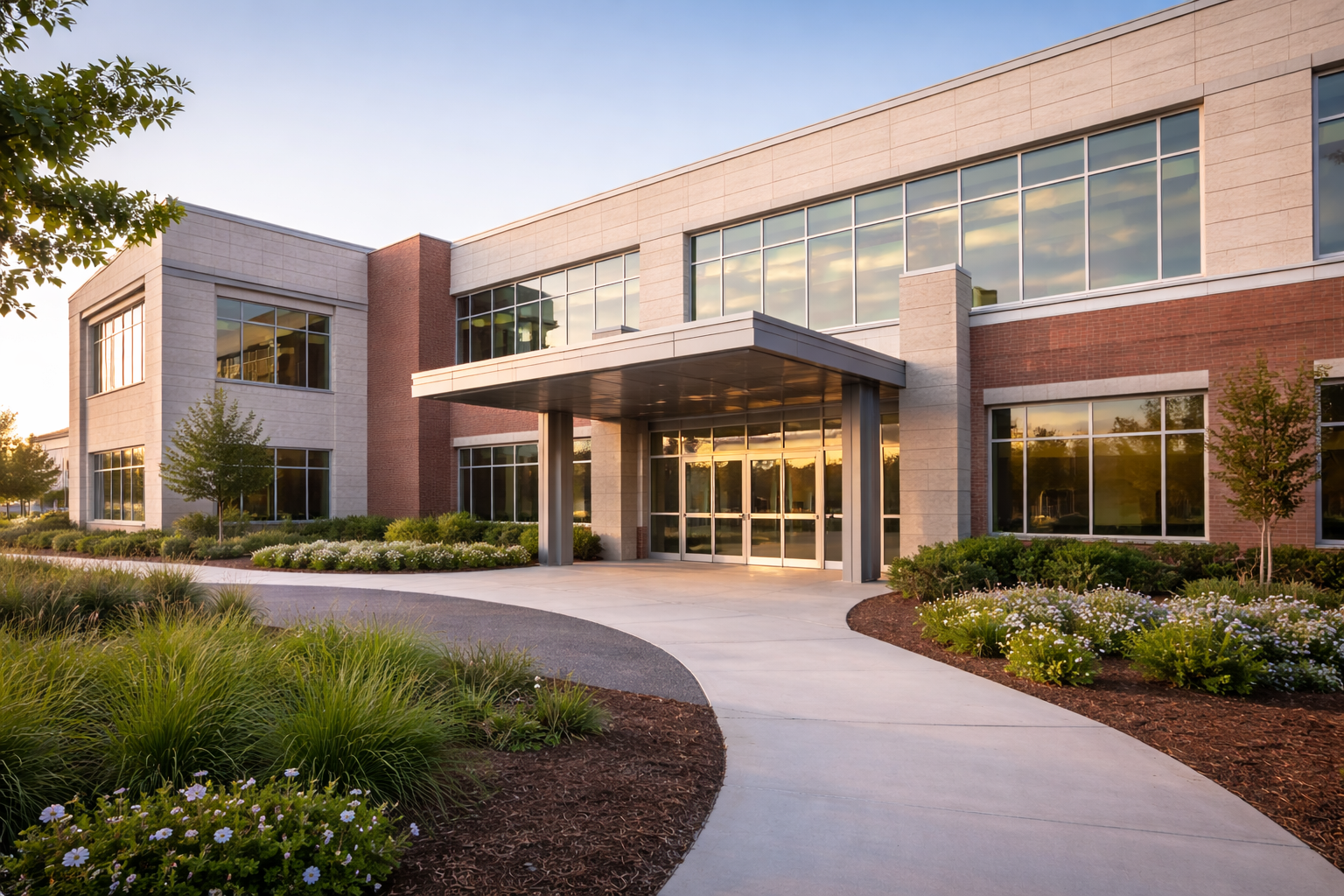

Healthcare facilities are built to serve communities for decades. Yet some buildings still function efficiently twenty years later, while others begin to feel strained within five.
The difference is rarely cosmetic. It is structural, mechanical, and strategic.
A healthcare building that ages well is one that was designed with flexibility, durability, and operational evolution in mind from the beginning.
Infrastructure Depth
One of the most important indicators of long-term performance is the strength of the building’s infrastructure.
Mechanical capacity, electrical distribution, plumbing systems, and structural load allowances determine how easily a facility can adapt to new equipment, new service lines, or new regulatory requirements.
Facilities that are built right to the edge of current need often struggle when demands shift. Buildings with additional capacity, thoughtful system layout, and accessible service zones are easier to update without disruptive renovation.
Infrastructure rarely draws attention when a building opens. Over time, it becomes one of the most valuable assets in the structure.
Layout That Anticipates Change
Healthcare operations evolve. Staffing models shift. Technology improves. Patient expectations adjust.
Buildings that age well tend to have layouts that allow for modification without full reconstruction. Flexible exam rooms, adaptable office configurations, and modular support areas provide room for adjustment.
Column spacing, ceiling plenum depth, and corridor placement all influence future adaptability. When these elements are constrained, even small operational changes can become expensive construction projects.
When they are considered early, the building gains resilience.
Material Choices That Withstand Use
Healthcare environments experience continuous wear. Flooring, wall protection, millwork, and hardware are used at high frequency and must perform accordingly.
Materials selected solely for initial appearance may not perform well under long-term stress. Surfaces that are durable, cleanable, and maintainable contribute to both patient perception and operational cost control.
Buildings that age well do not rely on cosmetic refreshes to maintain credibility. They were constructed with performance in mind.
Operational Efficiency
Longevity is not just about systems and finishes. It is also about how well the building supports daily workflows.
Sightlines that enhance supervision. Circulation that reduces travel distance. Storage that accommodates realistic supply volume. Support spaces sized for actual staffing levels.
Facilities that remain functional over time tend to reflect careful consideration of these operational realities.
When a building consistently aligns with how care is delivered, it avoids the gradual friction that leads to premature renovation.
Site and Access
The external environment plays a role as well.
Parking ratios, traffic flow, and access points influence patient convenience and staff satisfaction. Buildings that age well often occupy sites that can support modest expansion or reconfiguration if demand grows.
A constrained site can limit even the best interior layout.
Planning Beyond Opening Day
Many healthcare projects are designed around opening day milestones. Inspections are passed. Occupancy begins. Operations start.
Buildings that perform for decades reflect a longer planning horizon. They anticipate growth, equipment change, regulatory evolution, and shifts in care delivery.
A healthcare facility is not a static asset. It is a living platform for care.
When flexibility, infrastructure strength, and operational alignment are built into the project from the beginning, the building is positioned to mature alongside the organization it serves.
Longevity is not accidental. It is the result of deliberate planning decisions made early in development.