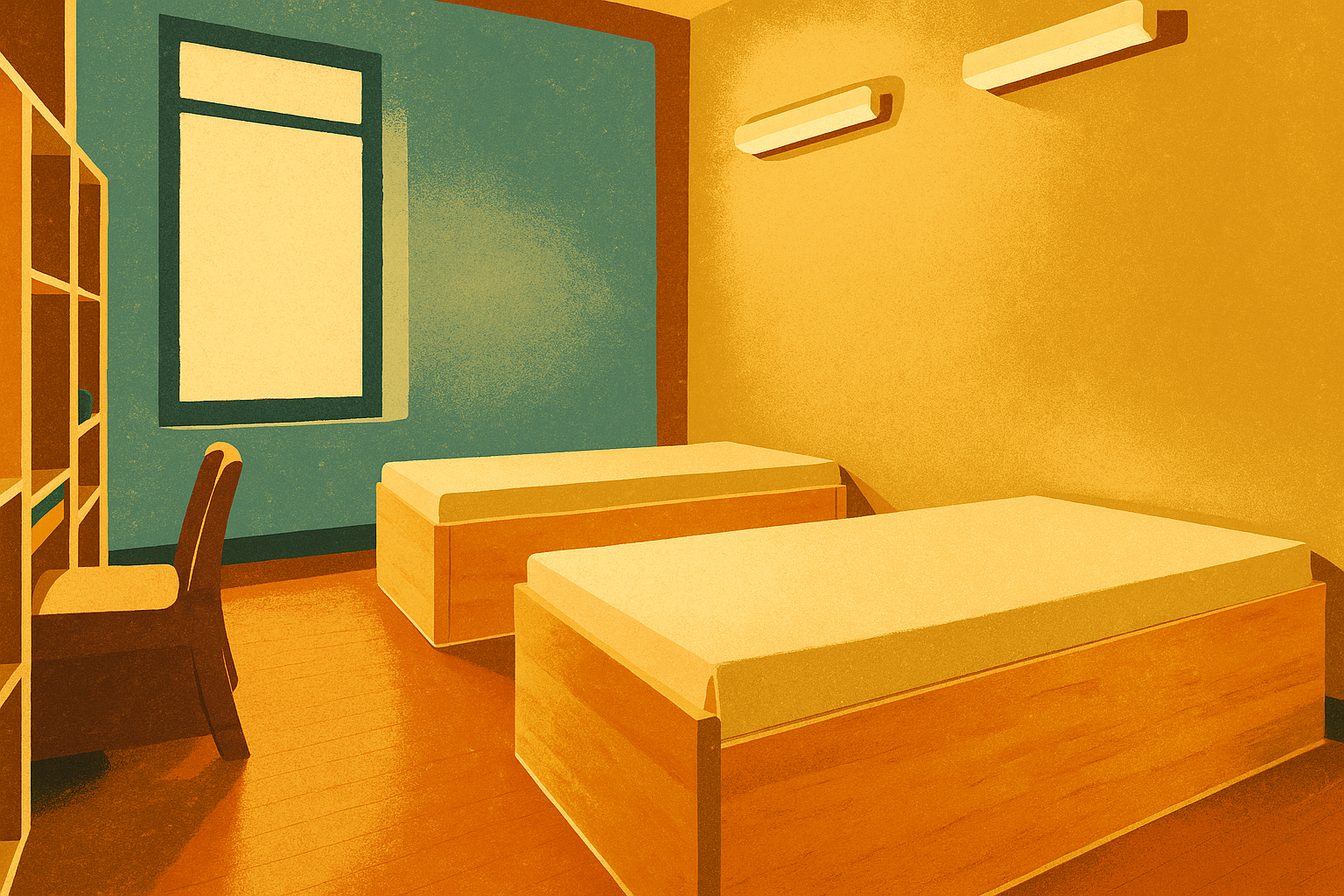

“Out with the old and in with the new” takes on new significance in the context of behavioral health design. Adaptive reuse is more than a design strategy, it’s a mission-driven approach to modernizing care environments while honoring the past.
From psychiatric hospitals to substance use disorder (SUD) treatment centers, we’re helping partners across the country reimagine existing buildings as modern healing spaces, blending clinical functionality with comfort, speed to market, and long-term impact.
Why Adaptive Reuse Matters in Behavioral Health
Therapeutic environments have a direct impact on patient outcomes. Research confirms that design elements like natural light, acoustic control, spatial flow, and privacy contribute to reduced stress, greater safety, and improved engagement in treatment.
Yet many legacy facilities fall short of this standard. That’s where adaptive reuse comes in transforming outdated or underutilized properties into purpose-driven, human-centered treatment environments.
Our Approach to Modern Behavioral Health Design
we incorporate the following design principles into every adaptive reuse project:
-
Human-Centered Interiors: We eliminate institutional aesthetics in favor of calming, homelike designs that reduce stigma and support dignity.
-
Safe, Inviting Patient Rooms: Privacy and security can coexist when planned with intention.
-
Therapeutic Programming Zones: We create flexible spaces for individual therapy, group sessions, and community engagement.
-
Healing-Focused Atmosphere: Materials, color palettes, lighting, and acoustics all play a role in reinforcing safety and recovery.
We collaborate with architects, operators, and design experts to ensure each project aligns with best practices in trauma-informed care and behavioral health-specific architecture.
Why Adaptive Reuse Works: Cost, Speed & Strategy
Compared to ground-up construction, adaptive reuse delivers distinct advantages:
-
Lower Capex: Reusing existing structures such as former skilled nursing facilities, schools, offices, or residential properties, saves significantly on build costs.
-
Accelerated Timelines: These projects often bypass early development hurdles (site prep, utilities, permitting), allowing facilities to open and operate faster.
-
Infrastructure Compatibility: Many existing buildings already include valuable features like wide corridors, ADA-compliant access, and utility backbones that reduce conversion complexity.
A Proven Playbook: Converting Skilled Nursing to Behavioral Health
One successful model we frequently deploy is the conversion of skilled nursing facilities (SNFs) into behavioral health centers. SNFs typically offer:
-
Existing clinical-grade layouts suitable for care delivery
-
Built-in infrastructure like nurse stations, accessible bathrooms, and private rooms
-
Community zoning classifications compatible with behavioral health usage
This model delivers meaningful value both clinically and financially, by repositioning assets for today’s mental health needs.
Building for Healing, Not Just Compliance
Today’s behavioral health spaces must do more than meet code, they must foster recovery. That’s why we work closely with care providers to ensure trauma-informed design and intentional procurement strategies are part of every adaptive reuse project.
We help source commercial-grade furnishings and finishes that balance durability, safety, and comfort, while ensuring facilities are welcoming for patients and supportive for staff.
